Introduction
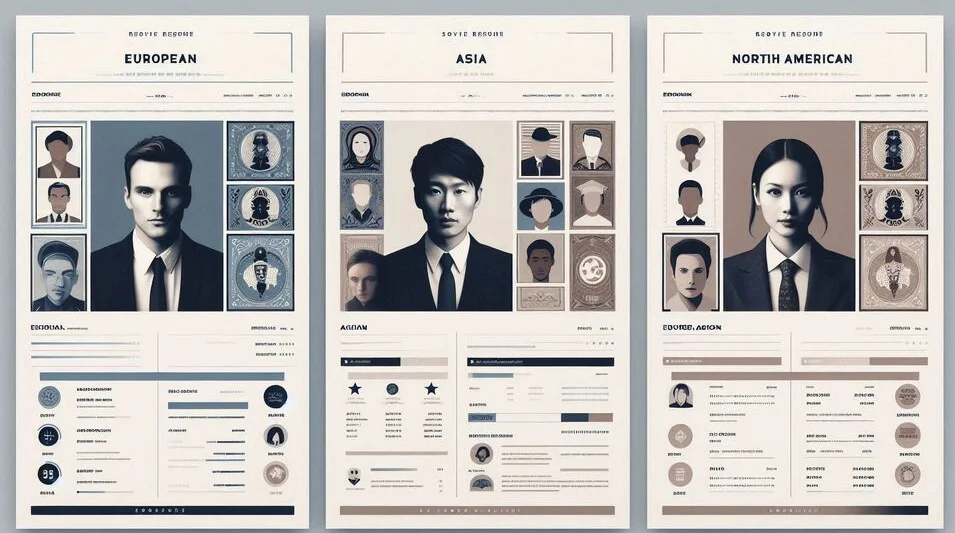
Resumes, or CVs (Curriculum Vitae), are essential documents for job applications worldwide, but their structure and expectations vary widely depending on the region. If you're planning to apply for jobs in different parts of the world, understanding the cultural and structural differences in resumes is crucial to presenting yourself in the best light. This blog post will break down the distinctions between European, Asian, and North American resumes, focusing on formatting, content, and cultural nuances. By the end, you’ll have a clearer understanding of how to tailor your resume based on regional expectations.
Overview of Resume Styles
Different countries have different conventions and expectations for resumes. While some regions prioritize detailed personal information and formal structure, others favor brevity and focus on achievements. Let’s explore the key characteristics of resumes in Europe, Asia, and North America to understand how to adapt your resume for each region.
European Resume (CV) Structure
In Europe, the term “CV” (Curriculum Vitae) is more commonly used than “resume,” and the format tends to be more standardized across countries, particularly within the European Union (EU). While there are regional differences, European resumes often share commonalities that make them distinct from other resume formats.
Layout and Design
European CVs generally follow a formal, structured format with clear sections. The most common layout includes the following:
- Personal Information – European CVs tend to include more personal details compared to North American resumes, such as date of birth, gender, marital status, and sometimes even a photo.
- Work Experience – Listed chronologically with the most recent experience first. Bullet points are used to describe roles and responsibilities.
- Education – Similar to work experience, education is listed chronologically. The focus is often on academic qualifications and the dates of attendance.
- Skills and Languages – These sections are often quite detailed. Languages spoken and proficiency levels are usually included, especially in multilingual countries.
While the design is typically clean and professional, European resumes tend to be longer (up to two or three pages) compared to the one-page norm in North America.
Content and Details
European CVs place heavy emphasis on qualifications, including specific certifications and language skills. References are often included or available upon request, and there’s an expectation that the resume will be tailored to the job description. In some countries like Germany, there may also be a request for a cover letter that follows a strict format. The inclusion of personal hobbies and interests is more common in Europe compared to North America.
Asian Resume Structure
Asian resumes vary by country but tend to share certain characteristics. Many Asian nations, such as Japan, South Korea, and China, have their own unique resume formats, which may look quite different from the Western norms.
Format and Organization
In countries like Japan and China, resumes are typically formatted in a very standardized way, with little room for customization. The format is often more rigid compared to European and North American resumes. Key sections of an Asian resume might include:
- Personal Information – Much like in Europe, resumes in Asia often start with personal details, including a photo, age, marital status, and even the applicant's family background.
- Education and Work Experience – Education and work history are listed in reverse chronological order, but they may not have the bullet-point descriptions seen in other regions. Instead, the emphasis is on the institutions attended and positions held.
- Reason for Applying – In countries like Japan, it’s common to include a brief explanation of why you're applying for the job or your long-term goals.
Asian resumes are often shorter than European CVs, and may not exceed one page in countries like Japan and South Korea. The resume tends to be more straightforward, with less focus on personal achievements and more focus on formal credentials.
Cultural Nuances in Asian Resumes
Culture plays a significant role in Asian resumes. For example, in Japan, there’s a high emphasis on humility, so job applicants may understate their achievements. Moreover, resumes in Japan often require a traditional form, known as a "Rirekisho," which is highly structured and includes personal information like your family background and a handwritten signature. In China, resumes may include a photo, and there’s often a focus on educational background and relationships rather than individual accomplishments.
North American Resume Structure
In North America, the resume format is typically concise and results-focused. While some countries like Canada may follow similar practices to the U.S., the U.S. style is more widely recognized and adopted across the region. North American resumes prioritize achievements, skills, and quantifiable results over personal details.
Format and Approach
North American resumes generally follow this structure:
- Contact Information – Includes your name, email, phone number, and a link to your LinkedIn profile (optional but common).
- Professional Summary – A brief section highlighting key qualifications and career goals, often tailored to the specific job being applied for.
- Skills – Bullet-point list of relevant technical and soft skills, including any certifications or licenses.
- Work Experience – This section focuses heavily on quantifiable achievements, using numbers to demonstrate impact. Job titles and company names are followed by concise descriptions of responsibilities and accomplishments.
- Education – Educational background, with an emphasis on degrees, majors, and schools attended. Less focus is placed on individual courses or grades unless they’re highly relevant to the job.
What to Include in a North American Resume
North American resumes are results-driven. Employers expect to see quantifiable achievements (e.g., "increased sales by 30% in six months") and specific contributions you’ve made in previous roles. Unlike European or Asian resumes, North American resumes generally do not include personal details like age, marital status, or a photo. References are also typically not included on the resume itself but provided upon request.
Key Differences Between European, Asian, and North American Resumes
While there are many similarities across the different resume formats, the following key differences should be noted:
- Length – European resumes are typically longer (2-3 pages), while North American resumes are usually one page. Asian resumes tend to be shorter, often limited to one page.
- Personal Information – European and Asian resumes often include personal details such as age, marital status, and photos, which are typically excluded from North American resumes.
- Achievements – North American resumes emphasize quantifiable achievements, whereas European resumes focus more on qualifications and language skills. Asian resumes tend to highlight education and institutions rather than individual accomplishments.
Conclusion
When applying for jobs internationally, it’s essential to tailor your resume to the expectations of the region in which you’re applying. Understanding the differences between European, Asian, and North American resumes will help you present yourself in the best possible light and increase your chances of landing a job. By following the right format and including the most relevant information for each region, you’ll be better equipped to navigate global job markets successfully.