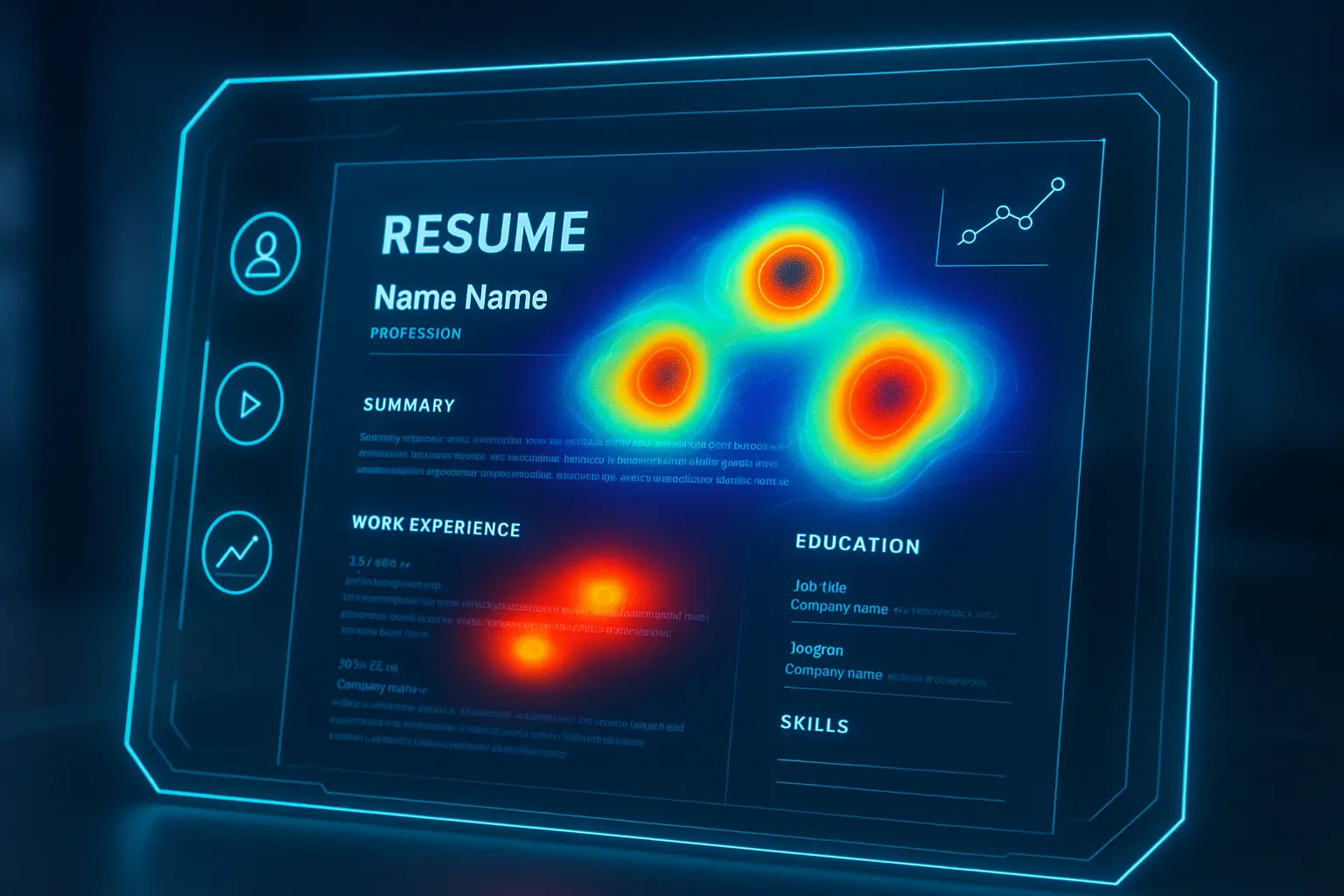
In today’s competitive job market, first impressions are often made in less than 10 seconds. That’s how long recruiters typically spend scanning a resume before deciding whether to read more or move on. Understanding which areas of your resume get the most attention — often called hot spots — can be the difference between landing an interview or being overlooked. In this post, we’ll dive into the science behind resume scanning, reveal which sections draw the most recruiter attention, and show you how to optimize your resume accordingly.
What Are Resume Hot Spots?
Resume hot spots are the specific areas of a resume where recruiters' eyes naturally gravitate during their initial scan. These areas play a crucial role in making quick judgments about a candidate’s suitability. Recruiters often don't read resumes word for word; instead, they skim for certain cues. By strategically placing high-impact content in these hot spots, you can maximize your resume’s effectiveness in a minimal amount of time.
How Recruiters Scan Resumes in Seconds
Eye-Tracking Studies on Resume Scanning
Studies conducted by The Ladders and other hiring platforms using eye-tracking technology have shown that recruiters spend just 6–8 seconds on an initial scan. These studies highlight where the eye lands first, how long it stays, and which areas are completely skipped. Most recruiters follow a predictable scanning pattern, pausing only when something stands out or matches the job criteria.
The F-Pattern and Z-Pattern Reading Behaviors
Two common scanning patterns are the F-pattern and Z-pattern. The F-pattern involves scanning across the top line, then down the left side, and occasionally moving horizontally again — forming an F-like shape. The Z-pattern involves a horizontal scan across the top, a diagonal move to the bottom left, and another horizontal scan — forming a Z shape. These patterns influence where to place critical information on your resume for maximum visibility.
Key Hot Spot Areas on a Resume
Contact Information
Placed at the top of the resume, contact details are one of the first things a recruiter sees. Make sure your name is bold and easily readable. Include your phone number, professional email address, and a LinkedIn URL if applicable. Avoid placing this section in a hard-to-read font or obscure location.
Professional Summary
This short paragraph just below the contact info can serve as your elevator pitch. Recruiters often glance here to get a quick idea of your value proposition. Use keywords and metrics that directly relate to the job you’re applying for. Tailor it to highlight your core strengths and career achievements.
Job Titles and Employers
Job titles are often the next area that recruiters look for — and they typically read down the left side of your resume. Use bold text to highlight titles, and ensure that employer names are clear and easy to scan. Recruiters use this section to assess your career progression and relevance to the role.
Dates of Employment
Often aligned to the right, employment dates are critical for understanding the duration and continuity of your work experience. Make sure they are formatted consistently and are easy to locate. Gaps in employment might raise questions, so be ready to address them in a cover letter or interview.
Skills Section
Most applicant tracking systems (ATS) and recruiters look for a skills section rich with relevant keywords. Place it high on the resume, ideally in the left or right margin or just below your summary. Keep it concise and targeted, listing tools, technologies, and soft skills relevant to the role.
Education
While less important for mid- or senior-level professionals, education is still a hot spot, especially for entry-level roles. Include your degrees, certifications, and institutions. Dates are optional depending on your years of experience. If you recently graduated, place this section higher on your resume.
How to Optimize Your Resume Hot Spots
To make the most of resume hot spots, consider these tips:
- Use clear, legible fonts like Arial, Calibri, or Helvetica
- Keep formatting clean and consistent throughout the document
- Use bullet points for easy readability
- Include keywords from the job description in strategic areas
- Quantify achievements using metrics and specific results
- Tailor every resume for the specific job, rather than sending a generic version
Tools Recruiters Use to Scan Resumes
Many recruiters now rely on applicant tracking systems (ATS) to pre-filter candidates. These tools scan resumes for specific keywords, job titles, and formatting. Some advanced ATS tools even use AI to assess resume readability and alignment with the job role. Understanding how these tools work can help you design a resume that appeals to both human recruiters and machines.
Final Thoughts
In the world of modern recruiting, your resume often has only a few seconds to make an impact. Knowing where recruiters look — and what they look for — allows you to structure your resume for maximum effectiveness. Focus on optimizing the hot spots with relevant, keyword-rich, and easy-to-scan content. Whether you are a seasoned professional or just starting your career, mastering the art of resume design is one of the most valuable investments you can make in your job search journey.